A leaking roof is more than just a minor annoyance for homeowners. It is an urgent problem that can lead to significant property damage if you ignore it. Even a small, steady drip can cause severe structural issues, rapid mold growth, and incredibly costly repairs over time. While calling a leak repair professional is always the most critical step, you should act fast to minimize the damage while you wait for help to arrive.
This guide provides essential roof leak repair tips to help you control the situation until our roof leak detection and repair team can visit your home. You will learn exactly how to stop a roof leak temporarily and protect your home with immediate, practical steps. We will also walk you through how to mitigate damage while you wait for your official leak report.
How to Stop a Roof Leak in an Emergency
When you first spot water dripping from your ceiling, it is difficult to know how quickly the problem will escalate. Your immediate goal is to contain the water and prevent water damage from roof leaks. By taking swift action, you can save your flooring, furniture, and sanity.
1. Clear the Area
Your absolute first priority is safety and protecting your personal belongings. Move furniture, electronics, and any other valuables away from the dripping water. If possible, clear the entire room to give yourself plenty of space to work.
Place a thick, waterproof tarp over anything too large or heavy to move, like large sectional sofas or heavy carpets. For your safety, tightly cover any nearby electrical outlets with plastic to prevent shorts or the severe risk of electrocution.
2. Contain the Water
Once the space is clear and safe, it is time to manage the active water flow. Place a large bucket or another heavy-duty waterproof container directly under the leak to catch the water. If the dripping is noisy or splashing out of the bucket, place an old towel inside the container. This simple trick will muffle the sound and drastically reduce messy splashing.
Keep a close eye on the container and empty it regularly. This helps you track the total volume of water entering your home and prevents disastrous overflows. Use old towels or a highly absorbent mop to soak up any water that has already pooled on the floor. Keeping the area completely dry helps prevent water damage to your expensive flooring and underlying subfloor.
3. Promote Air Circulation
After you mop up the visible puddles, use a fan, ideally a floor fan, to circulate air and significantly speed up the drying process. This is a crucial step to prevent dangerous mold and mildew from setting into your drywall and wood framing.
Be sure to plug the fan into an electrical outlet located far away from the active leak and any standing water. Safety must always come first when dealing with water and electricity.
Gathering Key Information About Your Roof Leak
Now that you have temporary control over your roof leak, a bit of careful detective work can provide vital information for our leak detection team. You do not need to climb onto the roof, but you can gather incredibly helpful clues from inside your home. This specific information will help the professionals diagnose the exact problem much faster.
What to Look For
Take notes on the following questions as you observe the leak:
- Location: Where exactly is the water entering the ceiling? Is it starting in the attic or dripping directly onto a lower floor?
- Timing: Does the leak only happen during a heavy rainstorm? Does it magically appear hours after the rain stops? Does it correlate with anything else, like a running shower or a running appliance on an upper floor?
- Damage: Carefully inspect the ceiling and walls immediately surrounding the leak for dark discoloration, bubbling paint, or sagging drywall.
Take clear photos and videos of the active leak and any visible structural damage. Be sure to timestamp all of your media files. This documentation is incredibly useful for your professional Leak Detection team and for any potential insurance claims you may need to file later.
Why You Need Professional Leak Detection and Roof Repair
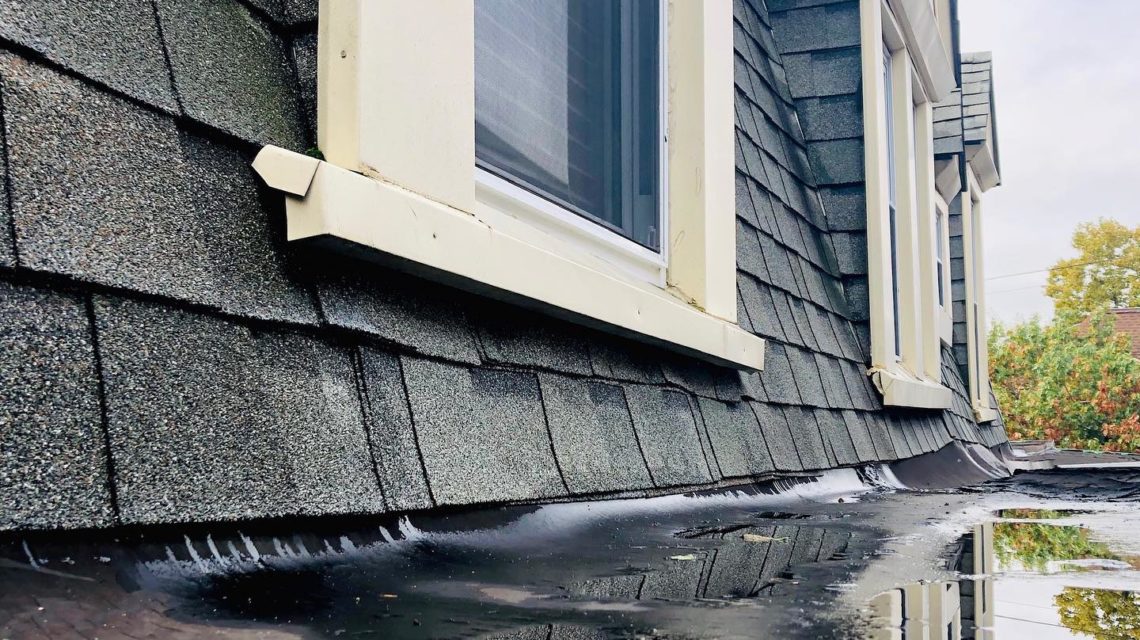
Temporary roof leak fixes are exactly that: temporary. A leaking roof can have numerous hidden underlying causes, ranging from visibly damaged shingles and broken flashing to far more complex issues deeply hidden within the building’s structural envelope.
A roofer or a general contractor will likely encourage you to replace your roof. While this could fix the leak, without addressing the root cause of the roof leak, the leak will often return. Now, you’re out tens of thousands of dollars and still have a leaking roof.
That is exactly where a dedicated leak detection specialist like Dr. Leaks makes a massive difference. We comprehensively examine the entire area rather than just looking at the roof, to find the true source of your water intrusion. We have extensive expertise in roofing, plumbing, and building waterproofing. This deep knowledge allows us to accurately diagnose and resolve even the most mysterious and stubborn leaks, likely saving you thousands of dollars on unneeded repairs
If you have a leak and you’re in Philadelphia or Washington, D.C., give our roof leak repair experts a call, and we’ll fix your leak, for good. Don’t let a small ceiling drip turn into an expensive home disaster.
What to Expect From Your Leak Detection Appointment
Our Leak Detection process begins with a thorough inspection of your home. Our Leak Detection team will check for possible water entry points, examine any visible damage, and use thermal imaging technology to inspect hidden areas, if necessary.
Then, we will replicate the leak, which allows us to determine the most effective repair solution for the leak. This often requires cutting a small hole in an interior wall or the ceiling, to better see the water intrusion. This whole process takes between 2 and 4 hours. As the homeowner, you or a decision maker should be present during this time for complete transparency.
After the Leak Detection appointment, our technicians will upload all the photos and videos from your house directly to your Buildertrend site and then generate a Leak Report within 14 business days. This report will document our findings, outline our recommended repairs, and an estimate for those repairs. We will talk through this report with you, step by step, and get you scheduled for Leak Repair if you’d like to move forward.
Most of the time, our professional field crew will cover your newly opened interior viewable area with protective plastic when they leave. While you wait for your Leak Report and subsequent Leak Repair, there are a few things you can do manage your roof leak:
- If you notice any water collecting directly in the plastic sheeting, please carefully poke a tiny hole in the bottom of it and allow the trapped water to drain directly into a waiting bucket.
- If your viewable area was not covered in plastic by our team, please do not cover it up yourself. In this specific case, the damp area needs to fully aerate and dry out completely prior to being structurally repaired.
Leaking Roof FAQs
What if I don’t know the source of my leak?
That’s what we’re here for! Leaks can be very mysterious, but we have decades of combined experience detecting leaks in homes. No matter where it is or what’s causing it, we’ll make sure we find that pesky leak.
Is a leaking roof an emergency?
Yes. Every single roof leak should be treated as a serious emergency. A seemingly small leak can escalate incredibly rapidly, leading to dangerous ceiling collapse, hidden structural rot, and widespread water damage throughout your home. Acting quickly by calling a trained professional will save you significant time, money, and emotional stress.
How long can you leave a leaking roof?
You should absolutely never ignore a leaking roof for any amount of time. Severe damage begins forming from the very first drip. The exact rate of damage heavily depends on the overall size of the leak, the specific type of roof you have, and the current weather conditions, but the risk is never worth taking. The best and safest course of action is to get the leak permanently fixed as soon as possible.
What causes roof leaks?
The actual causes of water intrusion are incredibly diverse. They can range from simply cracked or entirely missing exterior shingles, to severely damaged metal flashing around your roof vents and brick chimneys. In the winter, ice dams can force water under your shingles. Sometimes, the issue is completely unrelated to the roof itself, such as a hidden plumbing failure. Because the true source can be highly deceptive, it is vital to hire experienced leak detection experts who can pinpoint the exact cause.
Can I clean mold in my home myself?
You can, but without addressing the root cause of the moisture, the mold will just grow back. Our comprehensive approach to roof leak repair and mold remediation means we will fix the root cause so the mold is gone for good.
Do roof leaks always mean I need a new roof?
Most of the time, no. Many roof leaks can be repaired without a full replacement. We determine whether the issue is localized or part of a larger roofing problem before suggesting next steps.
Are Leak Detections weather dependent?
Our process is weather dependent and actually requires it to be somewhat dry in order to avoid false positives during testing. While we often can work through some light rain, it depends on the amount and intensity of the precipitation. If we need to move your Leak Detection due to weather, our team will contact you to reschedule.
When will the Leak Report be ready?
Within approximately 14 business days, our lead techs will review the Leak Detection team’s internal notes along with any photos and videos and generate your Leak Report. Once ready, you’ll be able to schedule a time to review your report. Your Leak Report will act as the estimate for your repairs and will detail your suggested repairs and the projected labor/materials.
Who do I talk to if I have a question?
If you have a question while the work is in progress the best person to chat with is your crew lead who will be on site conducting the work. If you are unable to speak with them for any reason, feel free to email us at info@drleaks.com (for the fastest response) or call us at 215-717-9667. You can also reach out to us today to schedule a free consultation.