Wynnewood, PA Leak Detection & Repair: Kitchen Ceiling and Basement Water Intrusion
A Real-World Leak Detection and Home Repair Case Study on Philadelphia’s Main Line
The Problem: An Intermittent Kitchen Ceiling Leak During Heavy Rain And Basement Water Intrusion
In a Wynnewood, Pennsylvania home, Dr. Leaks investigated and repaired multiple water intrusion problems involving a kitchen ceiling, a basement window and foundation, and a leaking copper plumbing line.
Each problem called for a targeted investigation to identify the source of the moisture, followed by repairs to the building components responsible for the leaks and restoration of the affected interior areas. Through systematic leak detection, controlled water testing, structural repairs, and cosmetic restoration, Dr. Leaks addressed the documented problem areas and helped return the affected spaces to pristine condition.
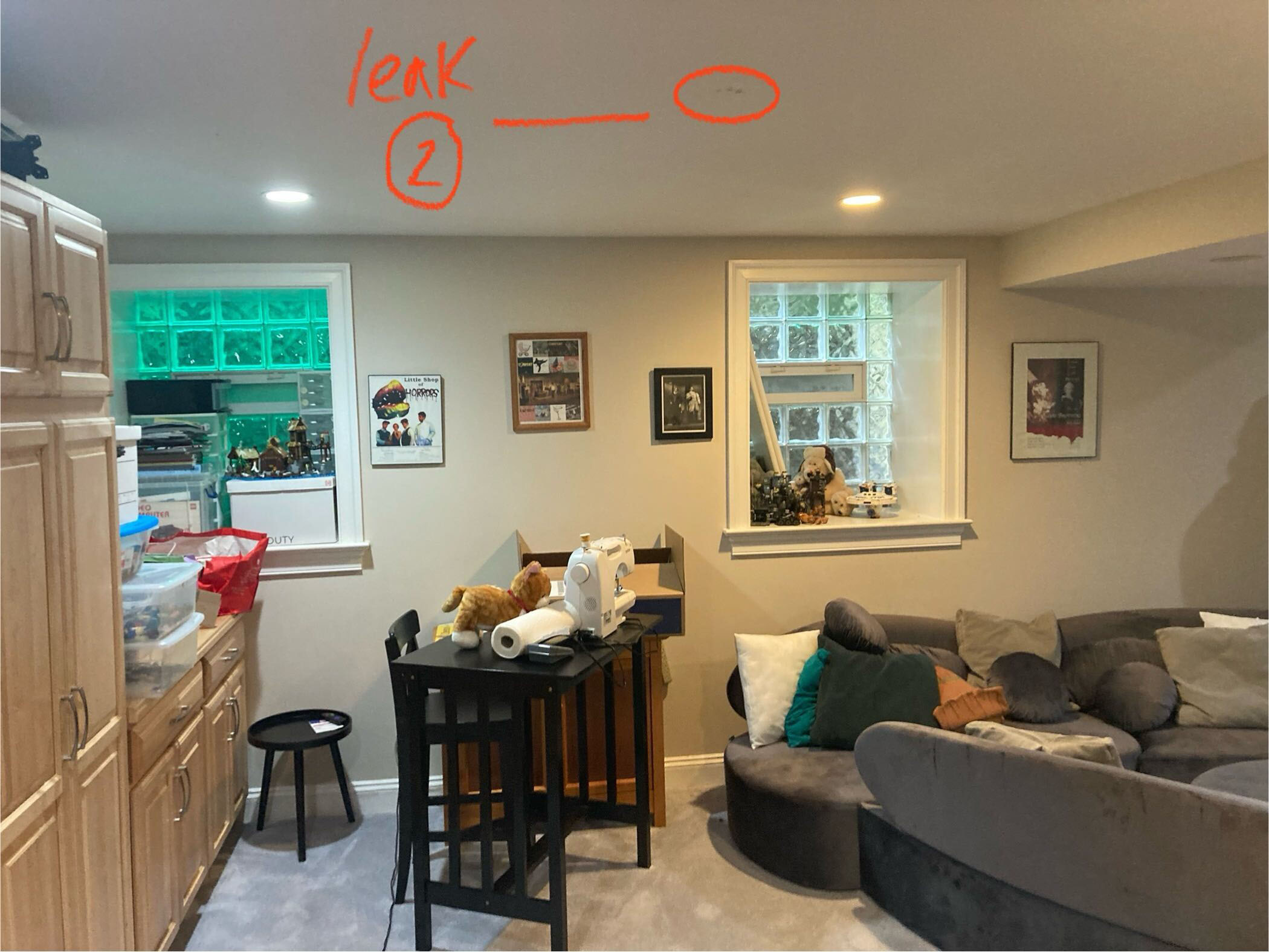
Kitchen Ceiling Leak Detection
The homeowner had experienced a recurring kitchen ceiling leak over several years. The problem was intermittent, typically appearing during heavy rain accompanied by wind. Although the water was visible inside the home, determining precisely where it entered the building required further investigation.
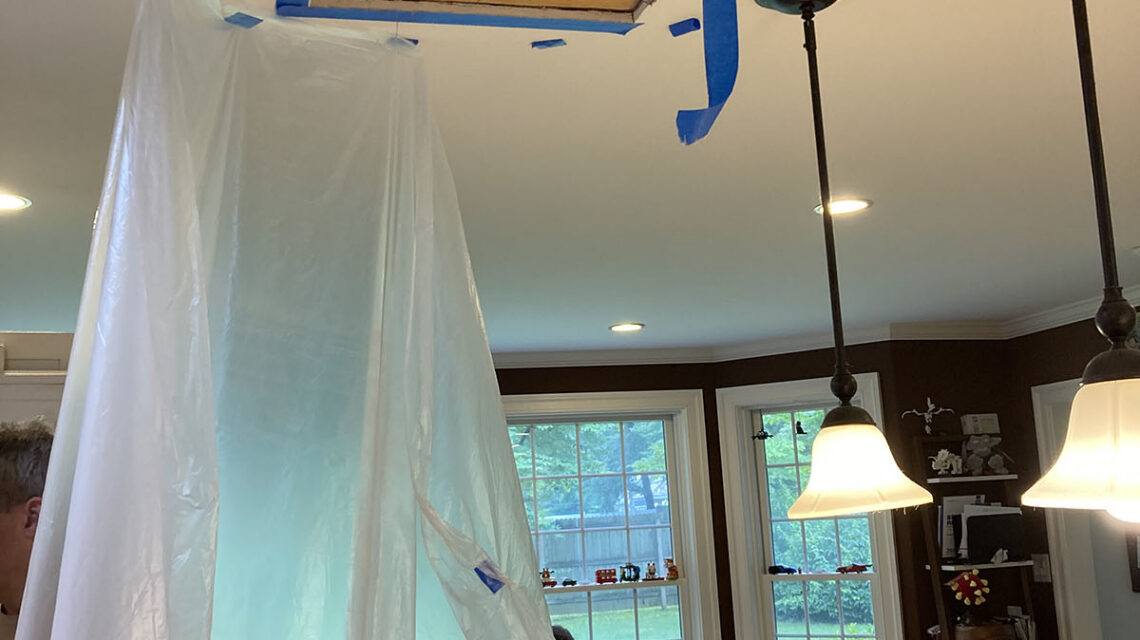
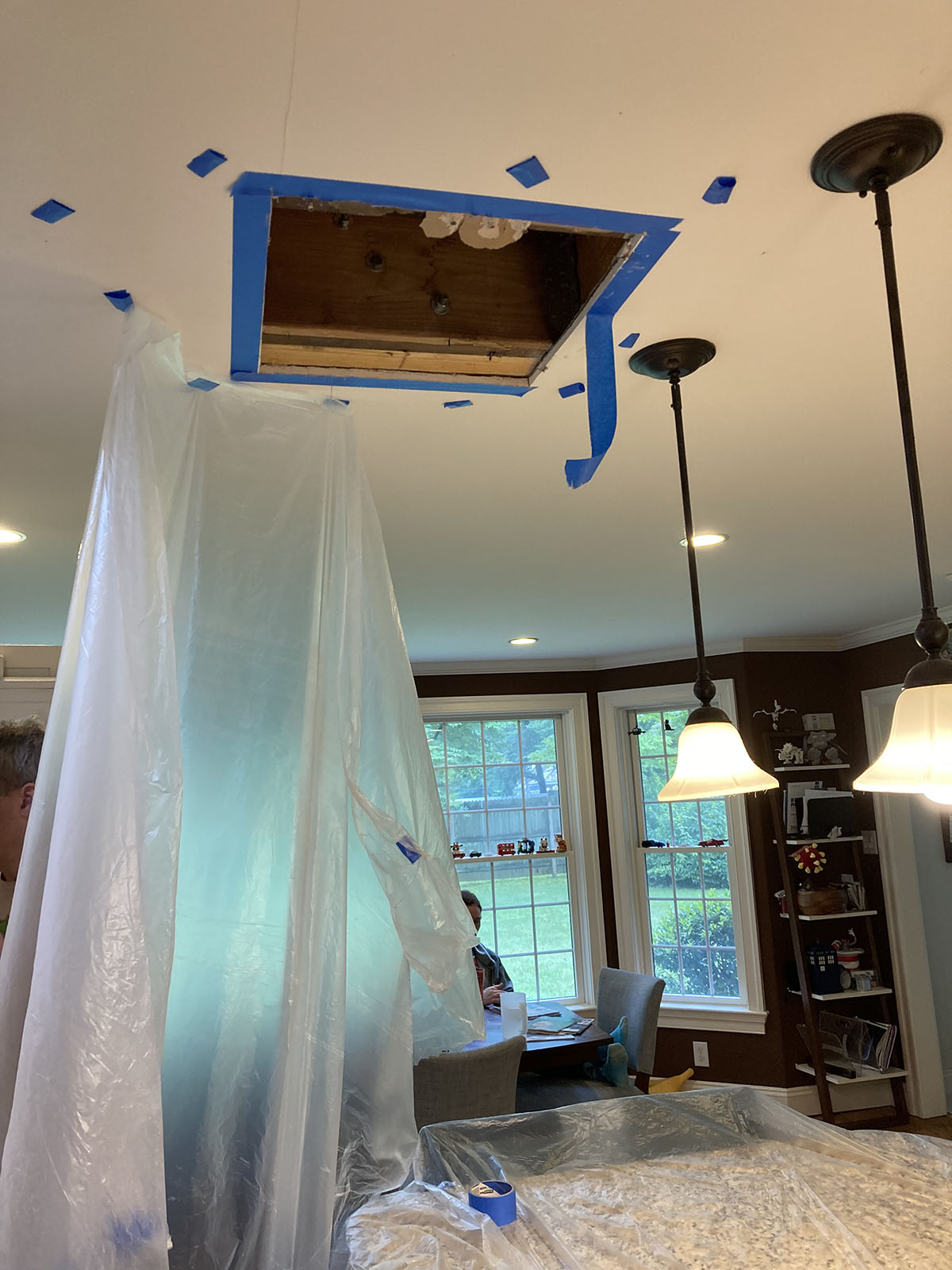
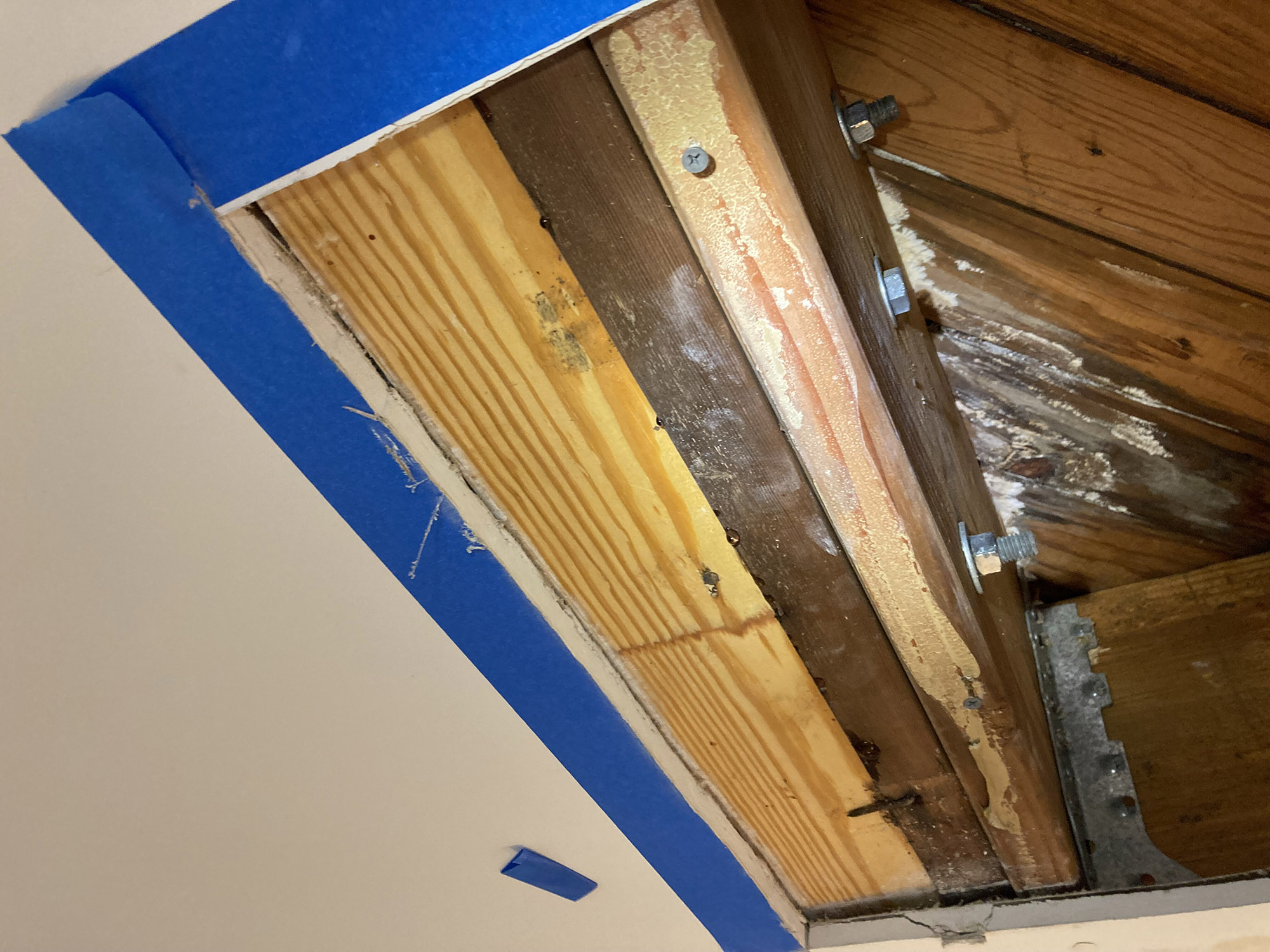
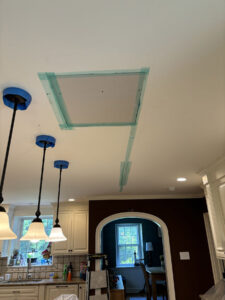
Dr. Leaks inspected the affected ceiling area and opened the drywall near a second-floor window to examine the concealed structure. Inside the ceiling cavity, the team discovered drip marks near the junction between an older section of the home and a later addition.
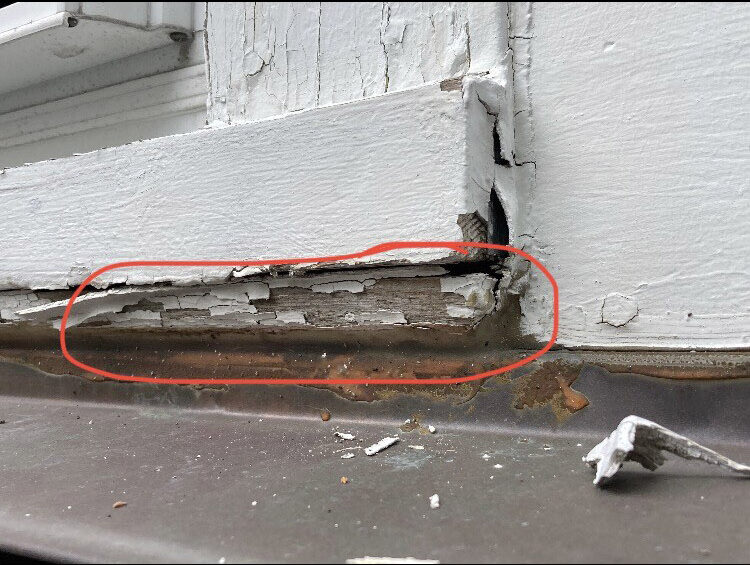
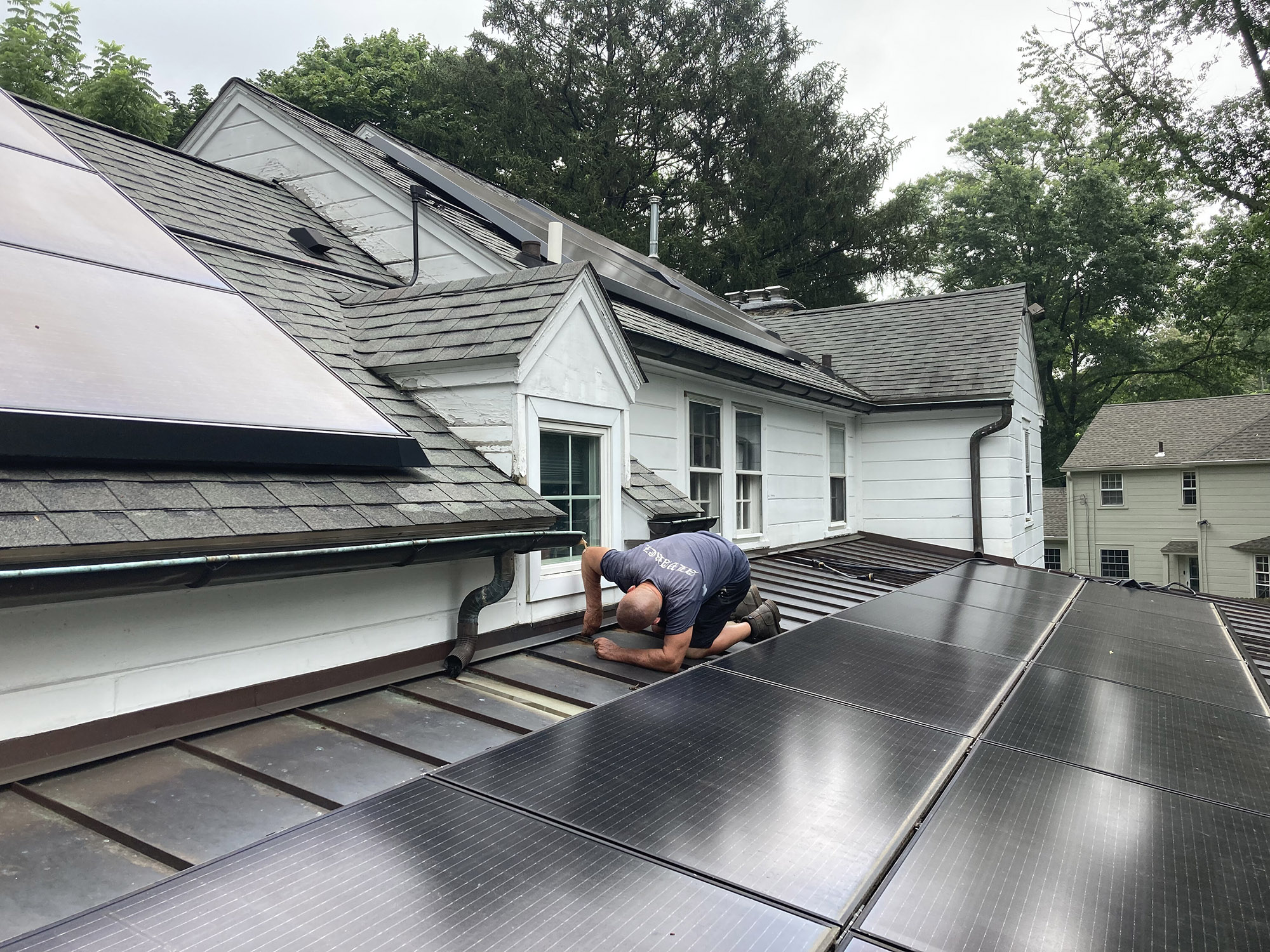
The exterior inspection revealed potential vulnerabilities around the windows, standing-seam metal roof, and roof-to-wall connection. Controlled water testing helped narrow down the source of the intrusion, with water appearing inside the ceiling during testing.
The findings pointed to a problem with the waterproofing and flashing where the metal roof met the exterior wall. This type of defect can allow wind-driven rain to penetrate the building envelope and travel through concealed spaces before becoming visible indoors.
The Repair: Correcting the Exterior Water Entry Point
With the likely source identified, the repair focused on the roof-to-wall connection and the surrounding waterproofing details. Addressing the exterior entry point was essential to resolving the underlying problem rather than simply repairing the stained ceiling.
Dr. Leaks completed the necessary exterior repairs to address the identified vulnerabilities. Once the leak-related work was completed, the affected interior ceiling area could be cosmetically restored.
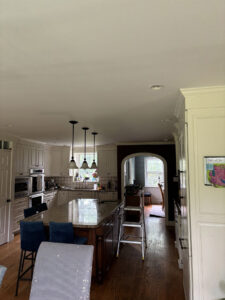
Insert photos: Initial ceiling damage, opened ceiling and concealed water tracks, roof-to-wall flashing investigation, exterior repair in progress, completed flashing details, and restored kitchen ceiling.
Basement Window & Foundation Leak Detection
The Problem: Basement Moisture, Damaged Materials, and Microbial Growth
A subsequent investigation uncovered a separate water intrusion problem along the basement floor and baseboard near a former fireplace and glass-block basement window.
Although the area did not appear visibly wet at the time of inspection, moisture readings behind the drywall were elevated. Minor microbial growth and localized damage to the baseboard and carpet tack strip provided additional evidence of a moisture problem.
Dr. Leaks opened sections of the drywall to inspect the concealed conditions. The investigation revealed damp materials near the former fireplace hearth and an existing crack in the foundation.
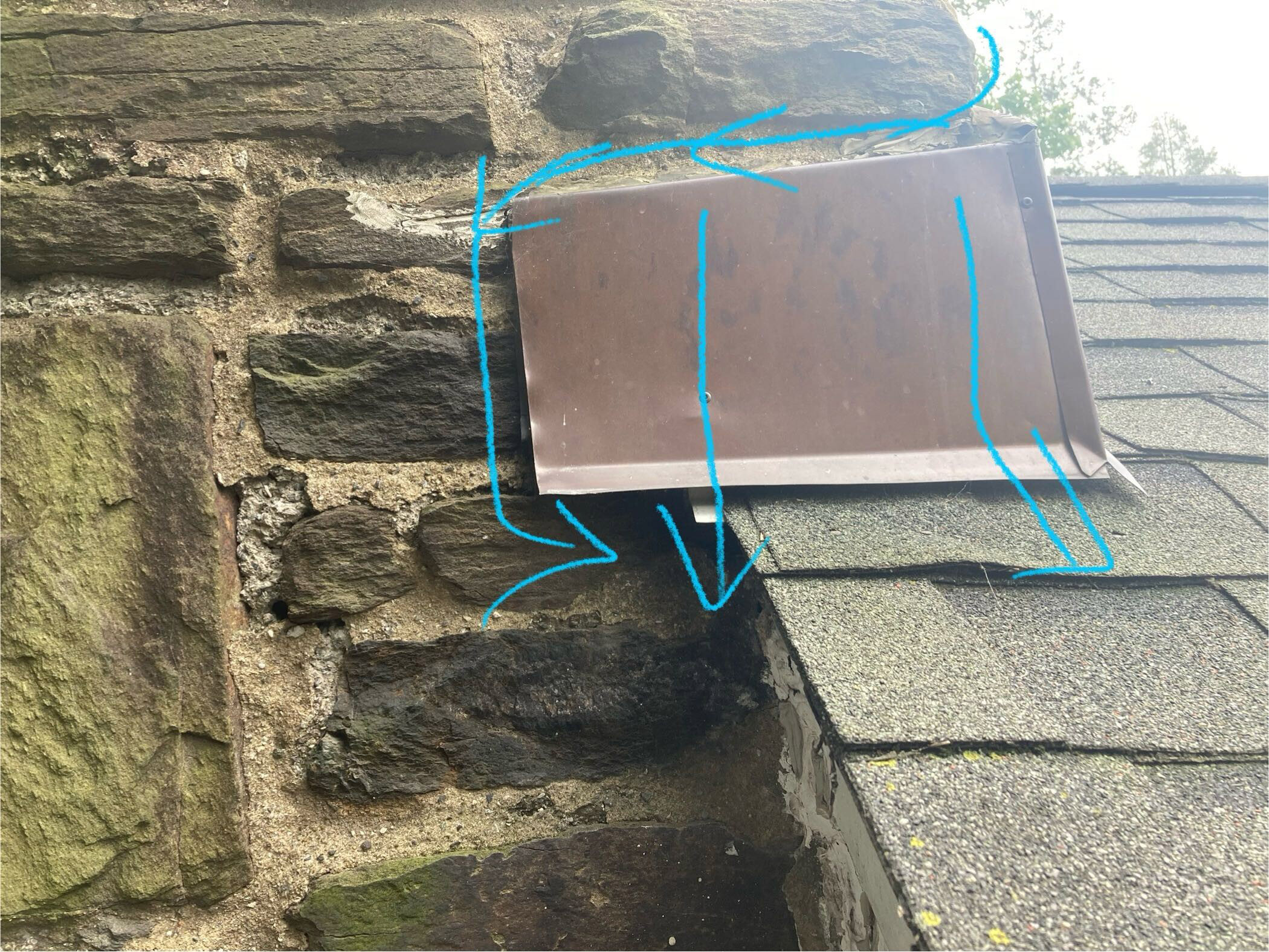
The team then inspected the exterior window well, stone façade, and nearby wall penetrations. Through controlled water testing, Dr. Leaks traced water intrusion to areas around the window well and nearby HVAC line penetration. Testing around deficient mortar joints also produced moisture intrusion at corresponding interior locations.
These findings demonstrated that the basement leak involved multiple potential entry points around the window assembly, exterior wall penetrations, and masonry. A lasting solution required addressing the vulnerable exterior details rather than treating the basement floor or wall as an isolated problem.
The Repair: Improving Window Flashing, Waterproofing, and Exterior Sealing
Dr. Leaks carried out the recommended repairs to address the identified water entry points around the basement window and adjacent exterior wall.
The repair plan included work on the window opening and flashing, waterproofing at the window well, sealing around the HVAC penetrations, and correcting deficient mortar joints in the surrounding stone façade. Improvements to the window well were also intended to help manage water near the basement window.
The affected areas were treated during the investigation, and the repair process addressed the exterior conditions contributing to the moisture problem. Following completion of the leak-related work, the damaged interior finishes could be restored.
Insert photos: Basement floor and baseboard damage, opened drywall showing concealed conditions, window well before repairs, window removal and flashing work, exterior masonry and penetration repairs, completed window well, and restored basement interior.
Basement Ceiling Leak Detection and Copper Pipe Repair
The Problem: Moisture and Microbial Growth Below a Leaking Plumbing Line
During the same October 2024 visit, Dr. Leaks investigated a second basement issue involving increasing microbial growth on the ceiling. Elevated moisture readings indicated an active source of moisture above the damaged drywall.
After opening the affected ceiling, the team discovered older copper plumbing and observed a droplet forming on a section of the water supply line. The line was traced toward the first-floor plumbing, and nearby fixtures were tested as part of the investigation.
Although operating the kitchen sink, powder room, and basement bathroom did not noticeably change the dripping, the inspection identified a specific section of copper piping requiring repair.
The Repair: Replacing the Affected Copper Supply Line
Dr. Leaks completed the necessary plumbing repair to address the leaking section of copper supply piping. Correcting the plumbing leak was an important step in preventing continued moisture exposure to the surrounding ceiling materials.
Once the plumbing repair was completed and the affected area was ready for restoration, the damaged ceiling could be repaired and refinished.
Insert photos: Ceiling damage before opening, exposed copper piping, the affected pipe section, plumbing repair in progress, completed plumbing repair, and finished basement ceiling.
From Leak Detection to Complete Restoration
Addressing the Source of the Water Damage and Repairing the Affected Areas
This Wynnewood home illustrates why effective leak repair begins with an accurate diagnosis. The visible symptoms included a kitchen ceiling leak, basement moisture near a window and foundation, and a separate basement ceiling leak. However, each problem involved different building components and required a different repair approach.
By investigating the affected areas, opening concealed spaces where needed, and using controlled water testing, Dr. Leaks developed targeted solutions for the identified sources of water intrusion.
The work extended beyond locating the leaks. It included correcting vulnerable exterior waterproofing and flashing details, addressing basement window and masonry entry points, repairing the affected copper plumbing, and restoring damaged interior finishes.
The before-and-after photographs from this project document the process, showing the concealed conditions uncovered during the investigations, the structural and exterior repair work, and the finished interior spaces.
For homeowners in Wynnewood, Ardmore, Bryn Mawr, Wayne, and throughout Philadelphia’s Main Line, this project demonstrates the importance of addressing the cause of a leak before completing cosmetic repairs.
Need Professional Leak Detection in Wynnewood or the Philadelphia Main Line?
Whether you’re dealing with a recurring ceiling leak, water entering around a basement window, moisture along a foundation wall, or a suspected plumbing leak, Dr. Leaks can investigate the problem and help determine the appropriate repair approach.
Our goal is to identify where the water is entering, address the underlying problem, and help protect your home from continued water damage.
Contact Dr. Leaks today to schedule leak detection and repair services in Wynnewood, PA, and throughout the Philadelphia Main Line.