Bryn Mawr, PA Basement Leak Detection, Cast Iron Pipe Repair & Water Damage Restoration & Mold Remediation
Basement Plumbing Leak Detection and Repair on Philadelphia’s Main Line
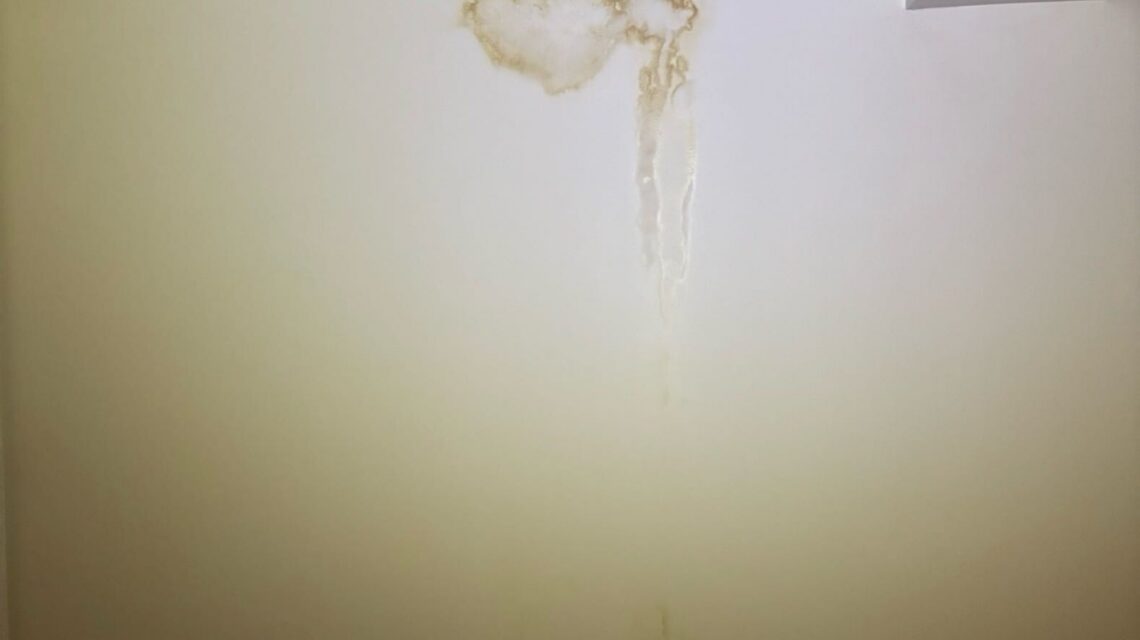
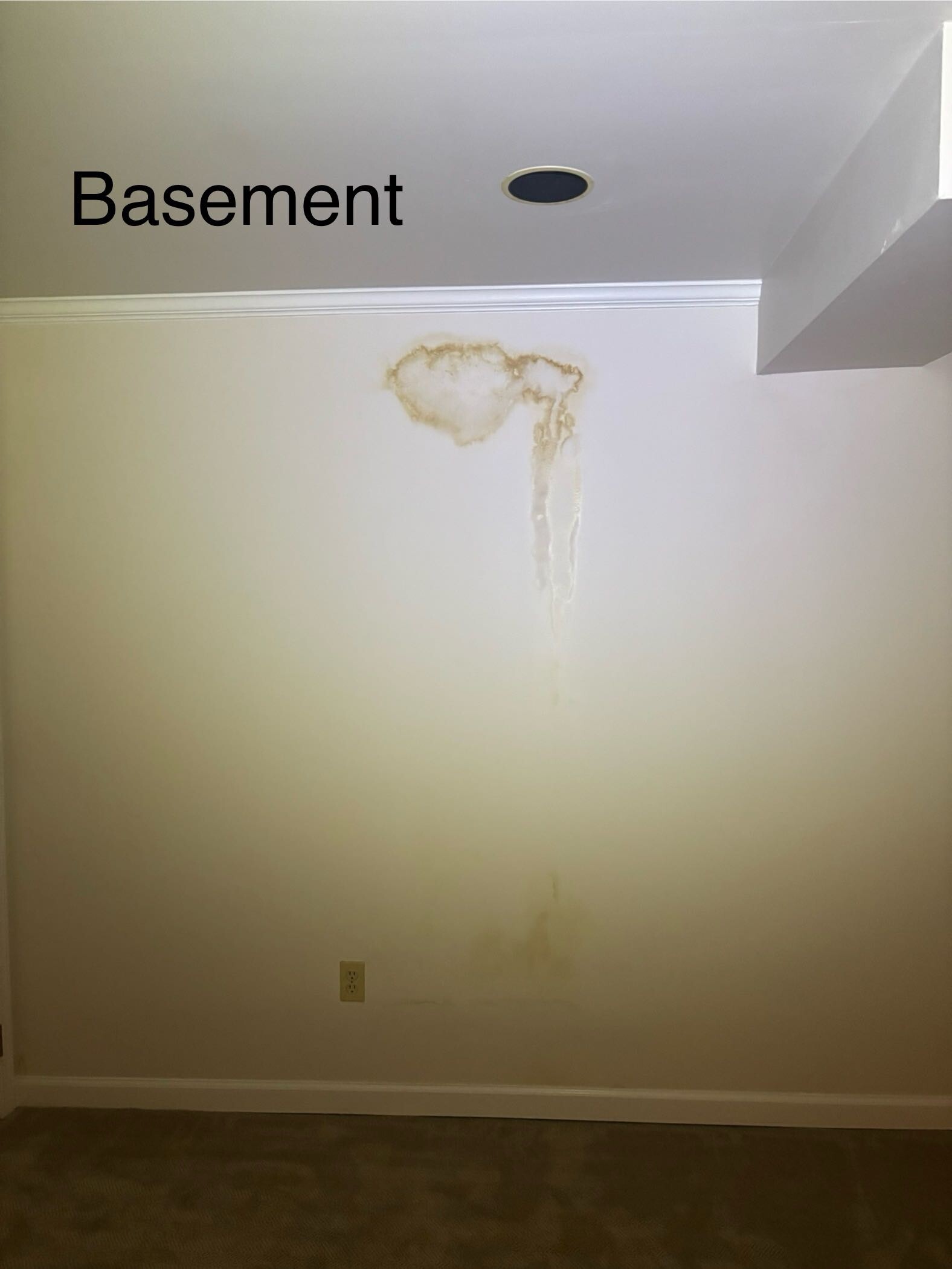
The Problem: Water Stains on a Finished Basement Wall
After purchasing a home in Bryn Mawr, Pennsylvania, the homeowner noticed water stains on a wall in the finished basement during the walkthrough. Although the visible damage was inside the home, the source of the moisture was concealed behind the finished wall.
Dr. Leaks was called to investigate the problem and determine where the water was entering the basement wall. Identifying the source was essential to developing an effective repair plan and addressing the underlying cause of the water damage rather than simply covering up the visible staining.
The investigation focused on the affected basement wall, the concealed plumbing, and the conditions that could be reproduced through controlled water testing.
Insert Photo: Water staining on the finished basement wall before the investigation.
The Detection: Discovering a Crack in the Cast Iron Drainpipe
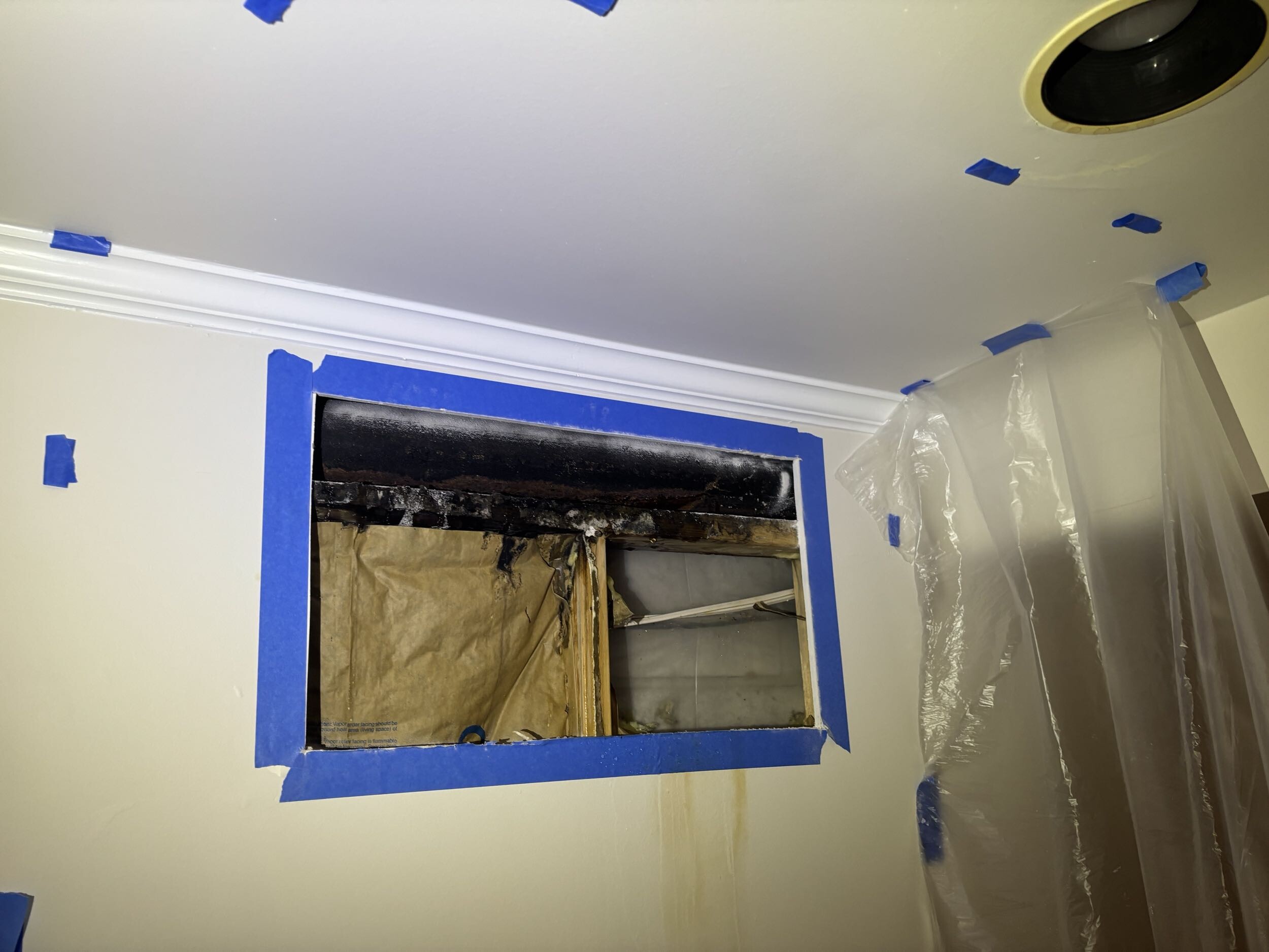
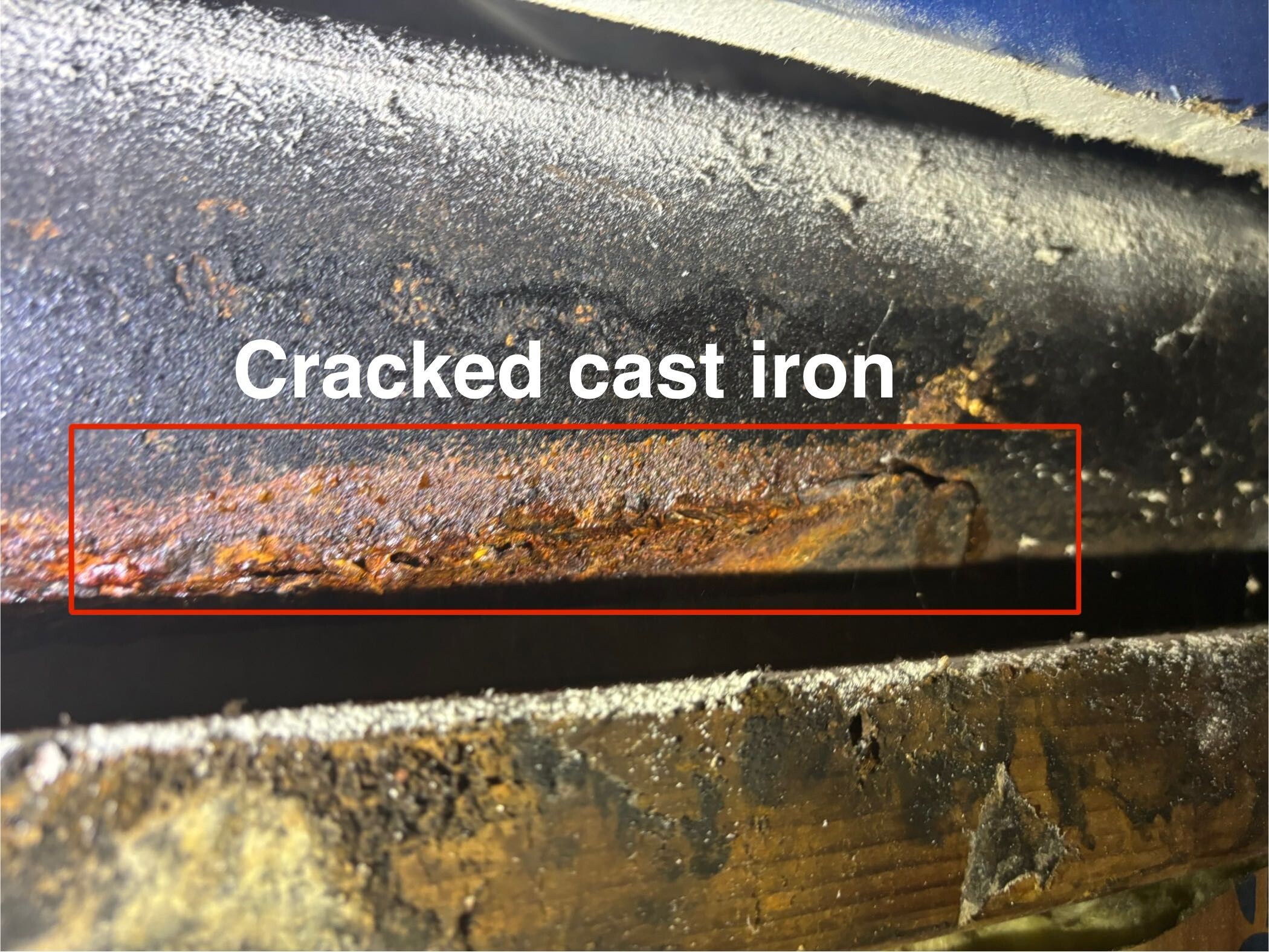
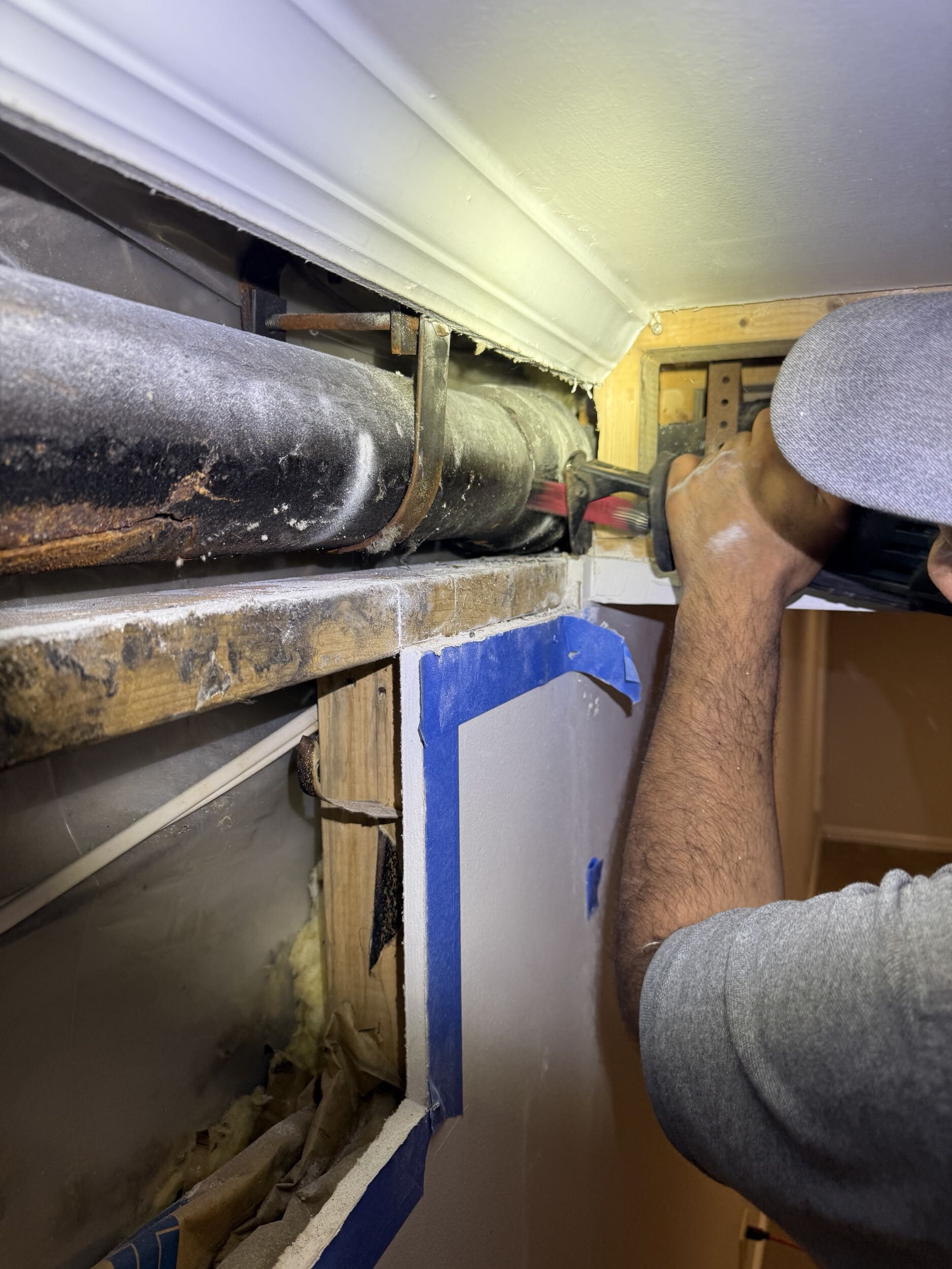
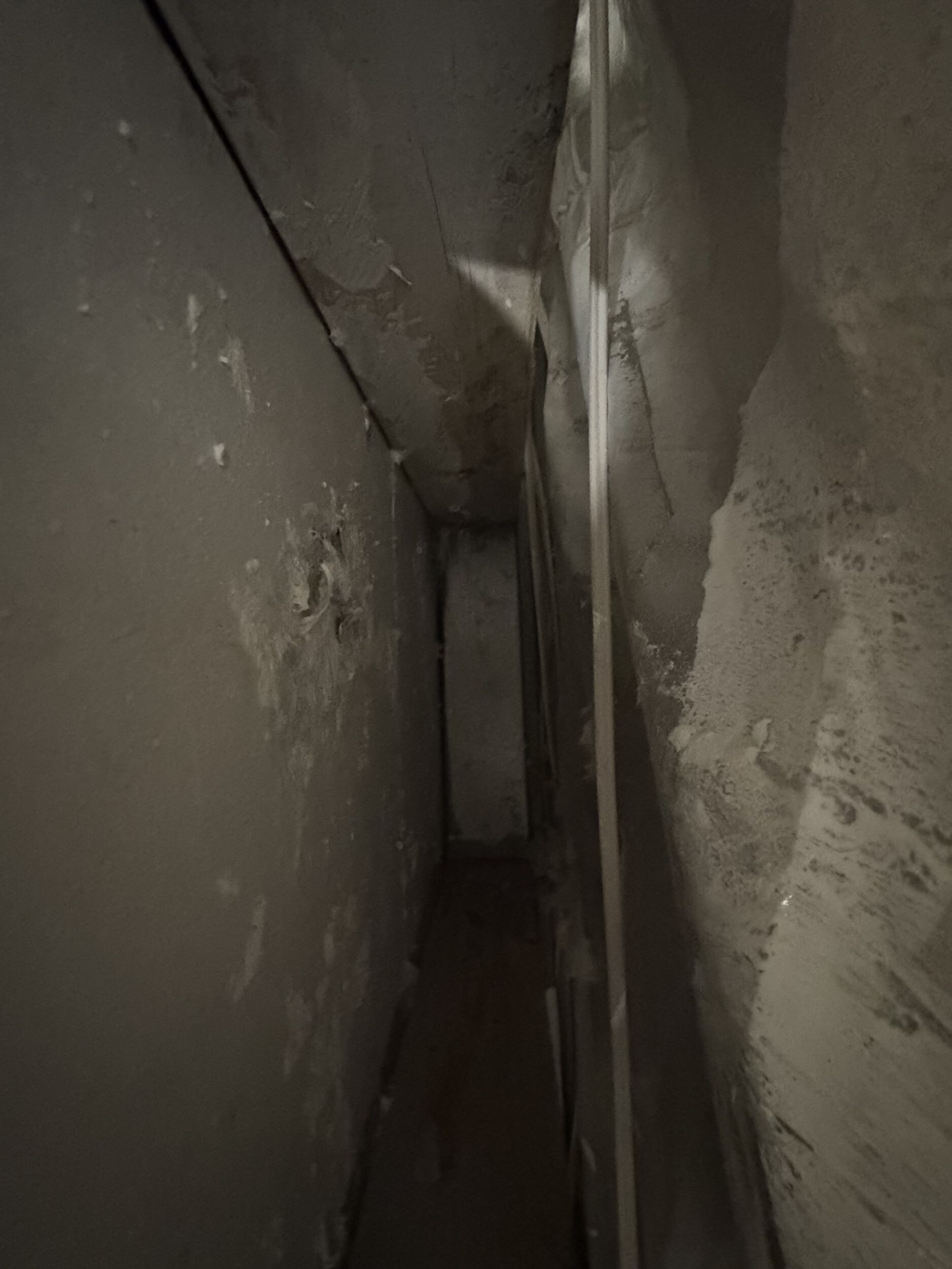
Dr. Leaks began by inspecting the affected area before opening a section of the basement wall to examine the concealed conditions. Inside the wall, the team discovered a large crack in an existing cast iron drainpipe.
To determine which plumbing fixture was contributing to the leak, the team conducted controlled water tests. Running the first-floor sinks for approximately two minutes did not reproduce the problem. However, operating the second-floor bathroom sink for approximately 30 minutes caused water to emerge from the crack in the cast iron pipe.
The leaking continued for approximately 15 minutes after the water test had stopped, providing further evidence of the plumbing defect and its relationship to the basement moisture.
These findings identified a concealed plumbing failure as the source of the observed water intrusion. Rather than treating the stained basement wall as an isolated cosmetic problem, the investigation established the need to address the damaged drainpipe before proceeding with interior restoration.
Insert Photos: The opened basement wall, exposed cast iron drainpipe, close-up of the crack, and water testing during the investigation.
The Repair: Replacing the Damaged Drainpipe and Addressing Water-Damaged Materials
The recommended repair plan addressed the plumbing defect and the affected interior finishes in separate stages.
Cast Iron Drainpipe Repair
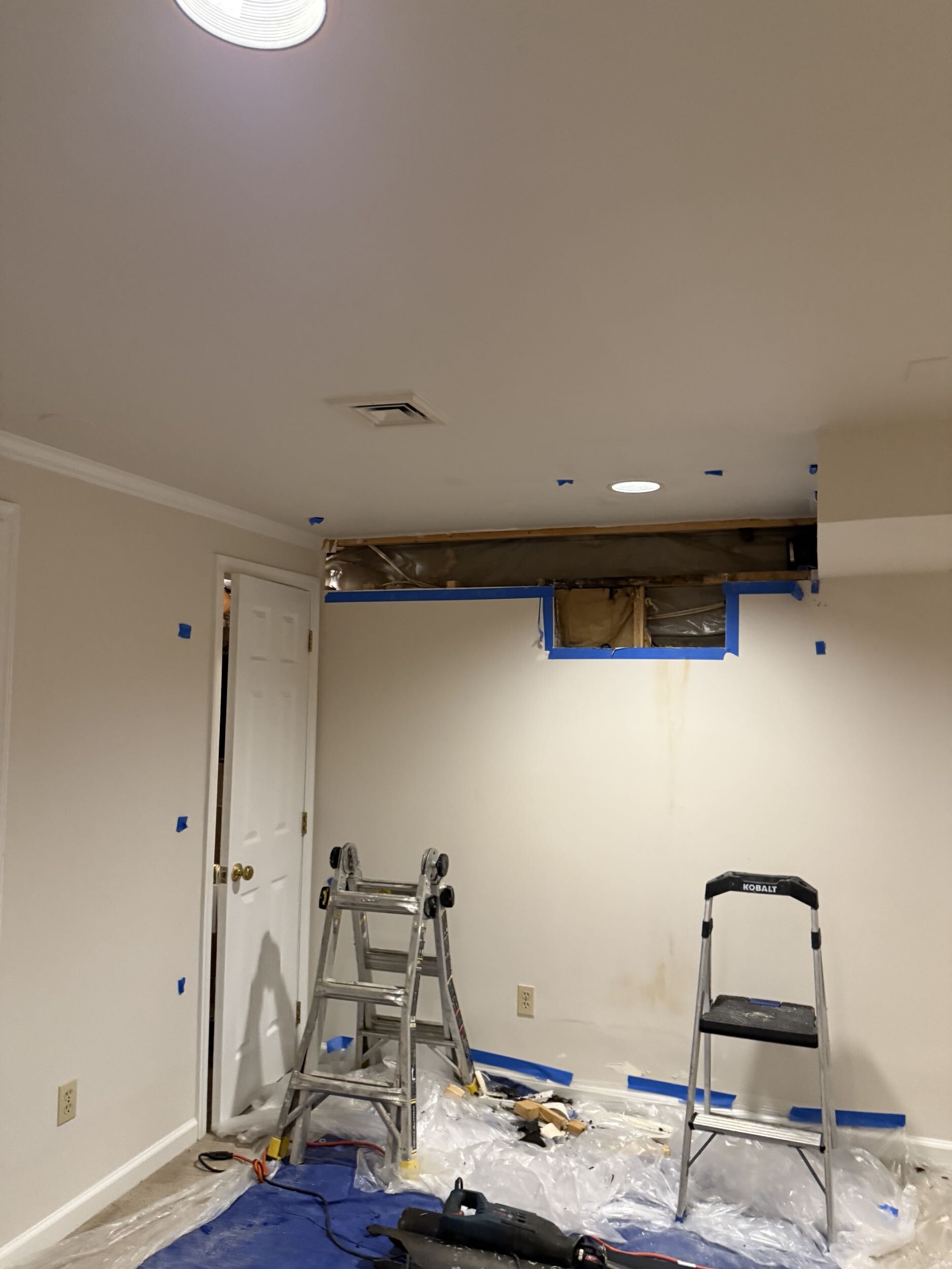
The plumbing repair scope called for removing the necessary crown molding
and opening the basement wall to gain access to the damaged drainpipe. The affected section of cast iron piping would then be secured, removed, and replaced with the necessary PVC pipe and fittings.
Following the pipe replacement, the plan called for operating the second-floor bathroom sink again to check for active leaks and verify the repair.
Correcting the plumbing defect was the critical first step in preventing the same source from continuing to introduce water into the basement wall.
Insert Photos: Access opening, damaged pipe removal, new PVC drainpipe and fittings, and post-repair plumbing water testing.
Water Damage and Mold Remediation: Cleaning, Treatment and Drying
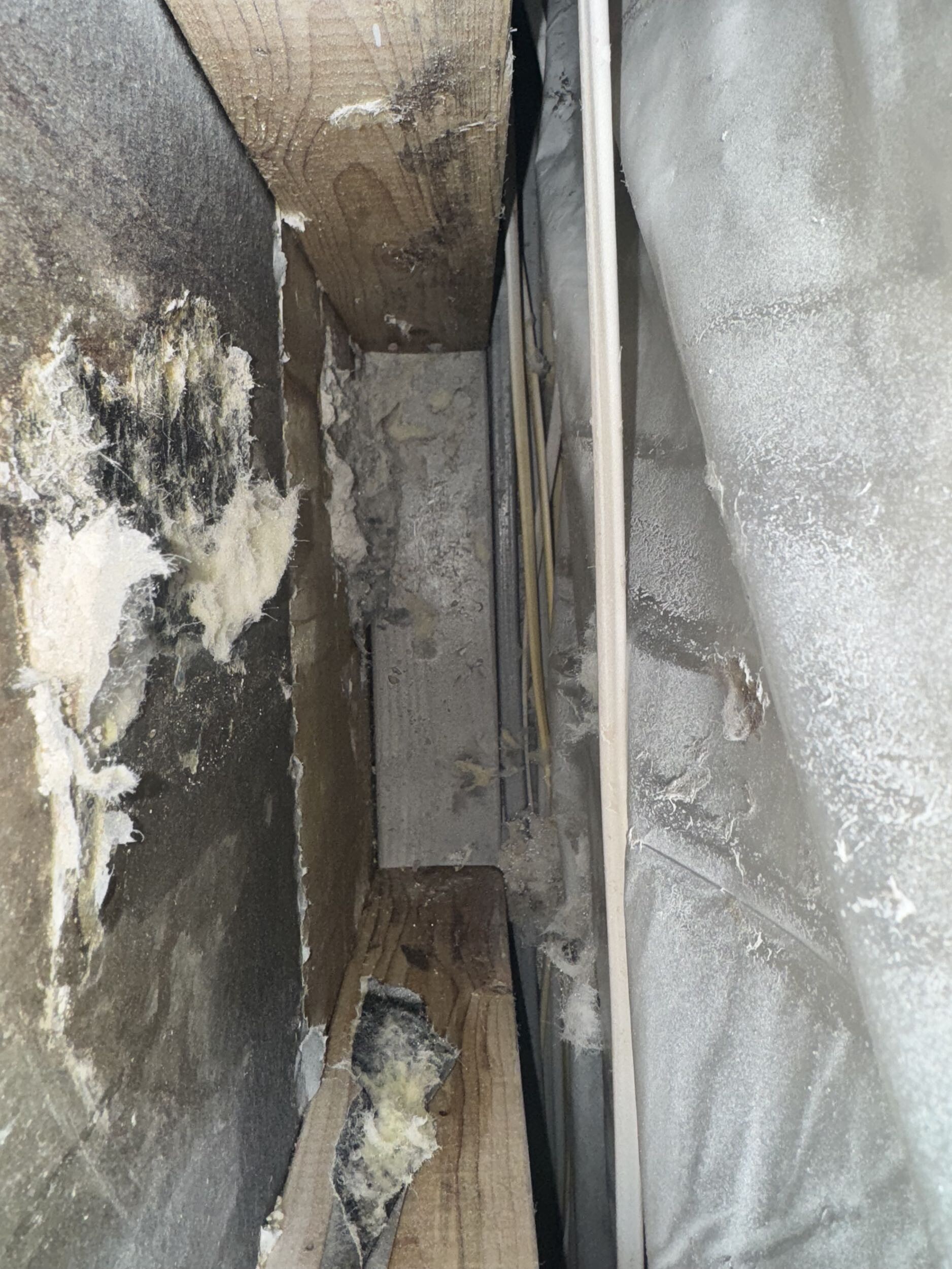
Where included in the approved remediation scope, the work also addressed mold-affected surfaces and moisture conditions within the affected area.
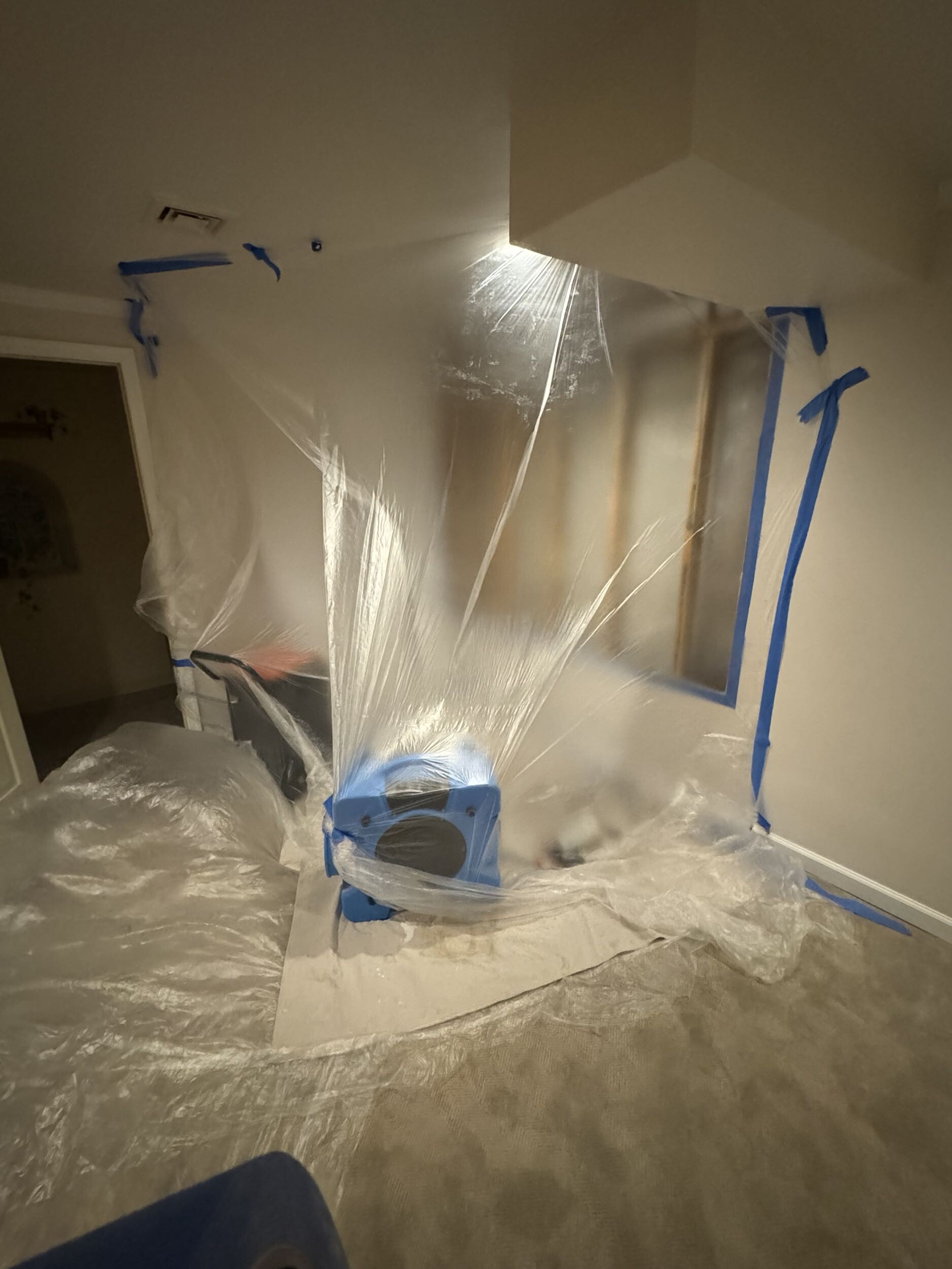
The planned three-day remediation process included containment using 6-mil polyethylene sheeting, installation of a dehumidifier and air scrubber, and HEPA vacuuming of affected surfaces. Damaged materials would be removed as necessary to access the affected area.
The cleaning and treatment phase included applying antimicrobial or mo
ld treatment, wire brushing or sanding semi-porous surfaces where needed, performing additional HEPA vacuuming, and wiping down and sanitizing remaining surfaces.
During the final phase, the team would monitor humidity and moisture levels, apply an additional treatment coat if necessary, remove the equipment, and complete the final cleanup and debris removal.
Proper sequencing is important when addressing water damage: the underlying leak must be corrected, affected materials must be appropriately addressed, and the area must be adequately dried before cosmetic restoration is completed.
Insert Photos: Containment setup, affected materials, cleaning and treatment, drying equipment, and final cleanup.
Basement Wall Restoration
Once the plumbing leak was resolved and the repair was confirmed, the interior restoration scope addressed the damaged drywall, insulation, and crown molding.
The planned cosmetic work included removing any remaining water-damaged drywall and batt insulation, replacing insulation where necessary, installing backing for the drywall patch, and fitting new drywall to the affected area.
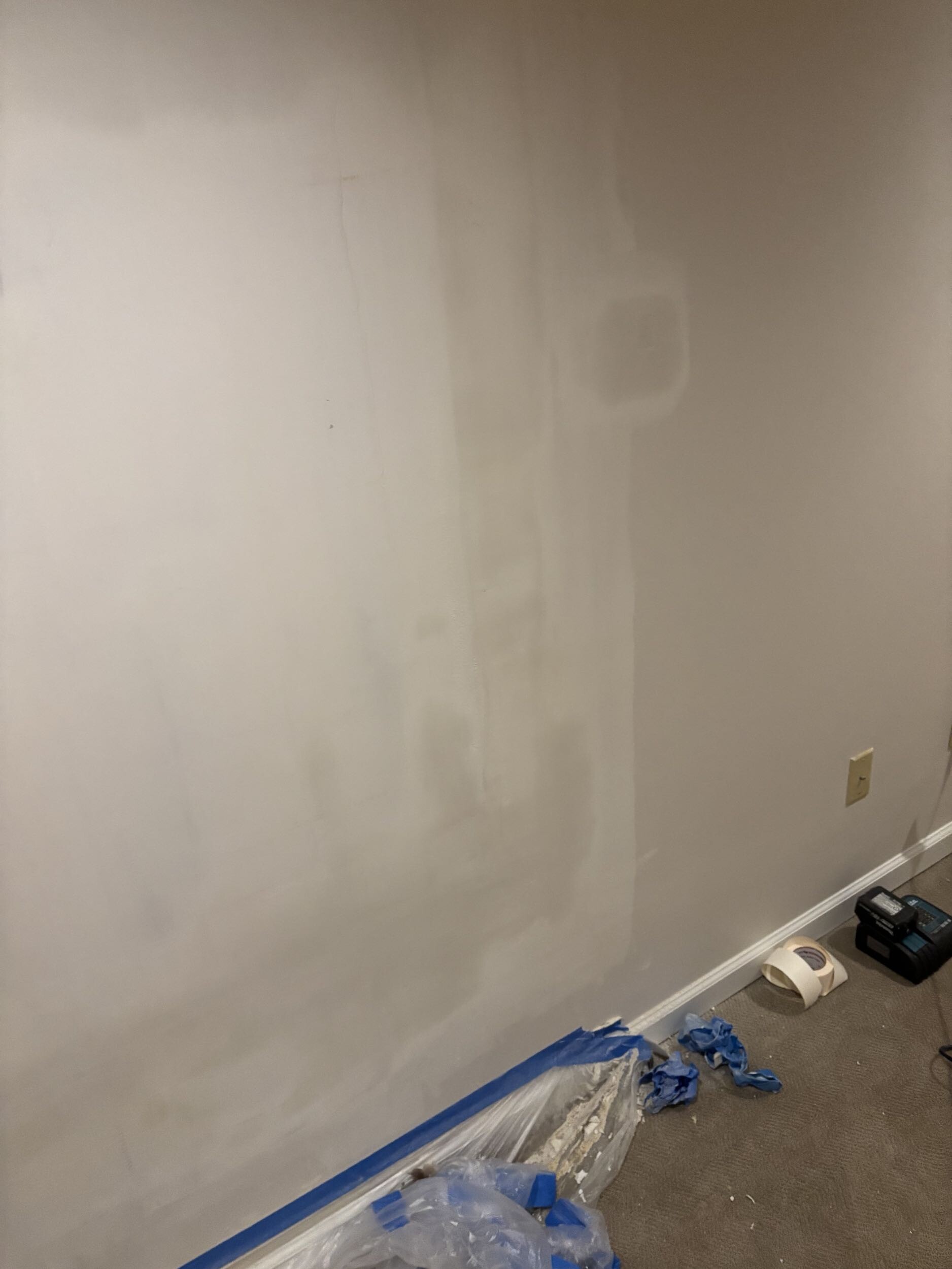
The drywall would then be taped, finished with spackle, sanded, primed
with stain-blocking primer, and painted to achieve the closest practical color and sheen match. The removed crown molding would be reinstalled, with nail holes filled and the molding repainted.
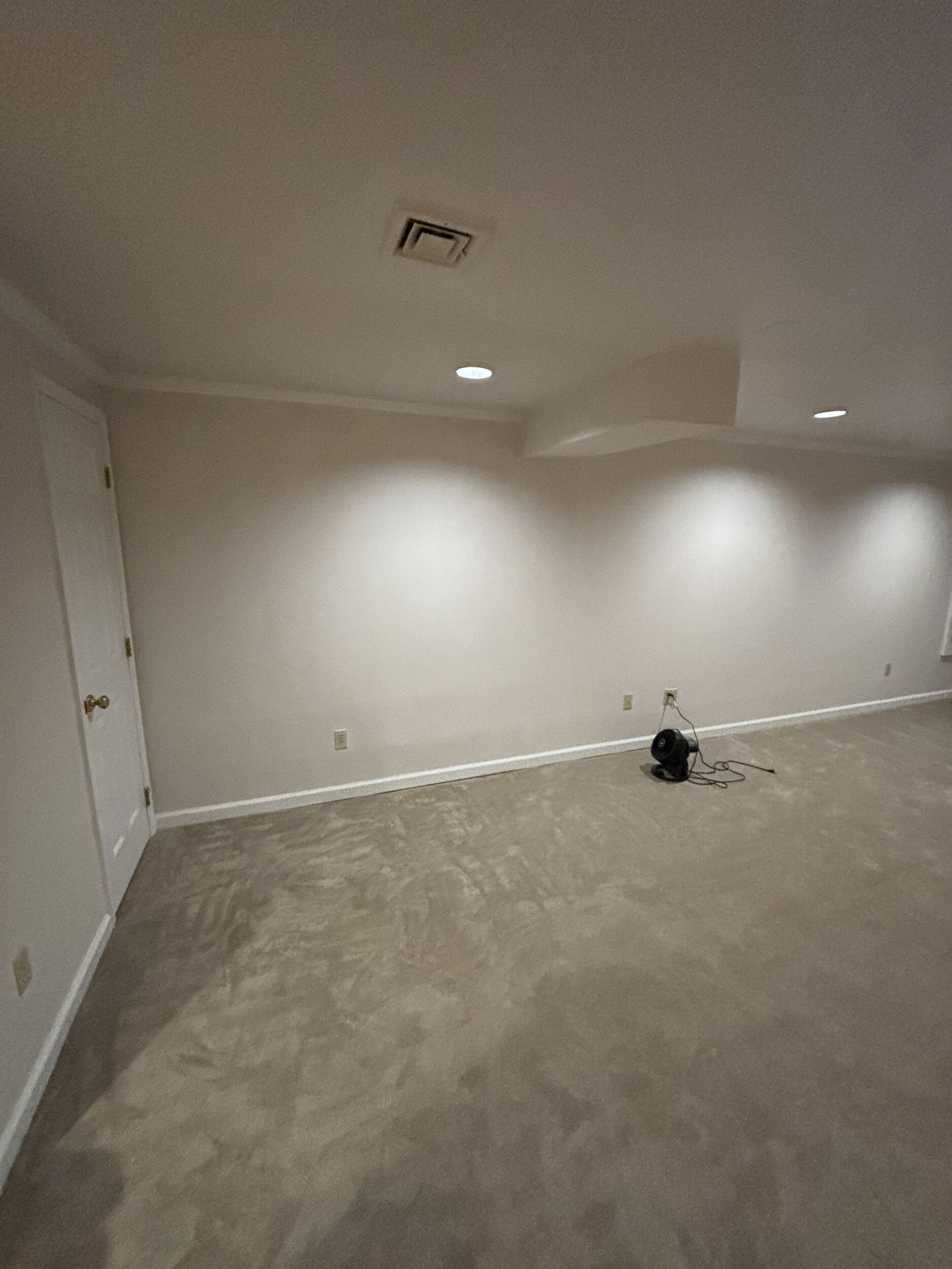
This approach addressed both the concealed damage and the visible finishes, helping return the basement wall to a clean, finished appearance.
Insert Photos: Removal of damaged drywall, inspection of the wall cavity, insulation and drywall replacement, drywall finishing, painting, and completed crown molding.
From Hidden Plumbing Leak to a Restored Basement
This Bryn Mawr basement project demonstrates why water stains should not be treated as merely a cosmetic issue. Moisture appearing on a finished wall can originate from plumbing concealed behind drywall, making a careful investigation necessary before repairs begin.
In this case, opening the affected wall exposed a significant crack in the cast iron drainpipe. Controlled water testing helped connect the leak to the second-floor bathroom sink, allowing the repair plan to target the underlying plumbing defect.
The proposed work also addressed the next stage of the process: dealing with water-damaged building materials, treating affected surfaces where required, drying the area, and restoring the basement’s interior finishes.
By addressing the source of the moisture and the resulting interior damage as distinct but related parts of the repair process, Dr. Leaks’ approach focuses on resolving the underlying problem rather than simply concealing the evidence of a leak.
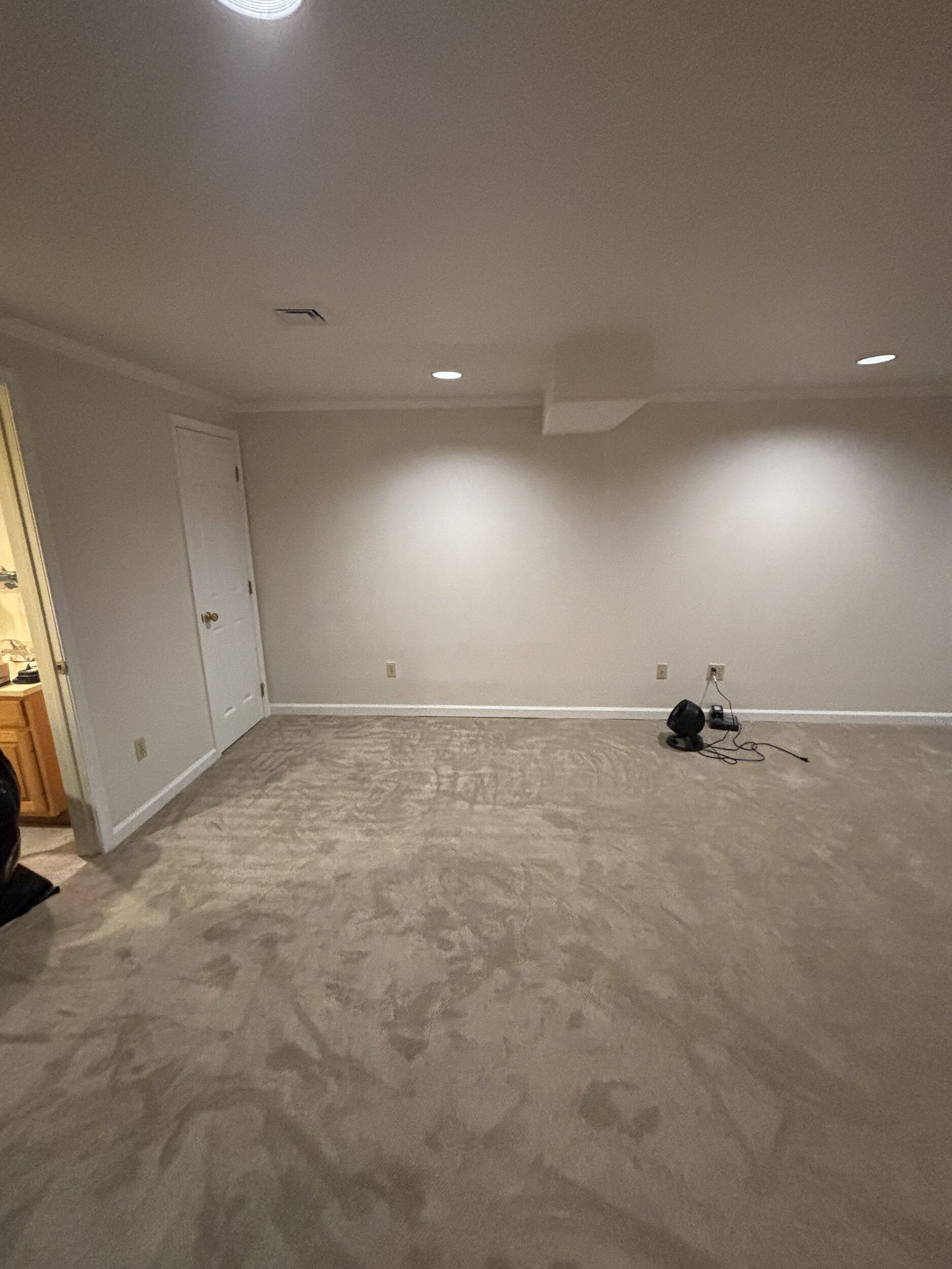
The project photographs document the investigation and repair process, illustrating the conditions hidden behind the basement wall and the steps involved in returning the affected area to a finished condition.
Need Basement Leak Detection or Plumbing Leak Repair in Bryn Mawr, PA?
Water stains, damp drywall, musty odors, and unexplained moisture can indicate a hidden plumbing leak or another source of water intrusion. Left unaddressed, ongoing moisture can damage drywall, insulation, trim, and other interior materials.
Dr. Leaks provides leak detection, plumbing leak repair, water damage repair, mold remediation, and cosmetic restoration services for homeowners throughout Bryn Mawr and Philadelphia’s Main Line.
Whether you’re dealing with a leaking drainpipe, unexplained basement water stains, damaged drywall, or suspected mold growth, identifying the source of the moisture is the first step toward an effective solution.
Contact Dr. Leaks today to schedule basement leak detection and repair in Bryn Mawr, PA, and throughout the Philadelphia Main Line.